Showing posts with label IFTTT. Show all posts

Thursday, September 22, 2022

Cannibal jailed after headless body fell out of his car ‘joins Putin’s bloodthirsty mercenaries to fight in Ukraine war’


A CANNIBAL killer has joined bloodthirsty Russian mercenaries recruited from jails to fight in Ukraine, it’s claimed.

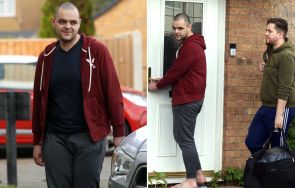
Yegor Komarov was arrested after a headless body with multiple stab wounds fell out of a car and he later admitted he “nibbled to just take a taste”.

Yegor Komarov admitted killing and eating parts of two victims

2

Yegor Komarov admitted killing and eating parts of two victimsCredit: Twitter
Yevgeny Prigozhin was filmed in prison recruiting murderers and sex offenders

2

Yevgeny Prigozhin was filmed in prison recruiting murderers and sex offendersCredit: Twitter / @AlexKokcharov

He is now among those who have joined the notorious Wagner Group of mercenaries after the man believed to be its leader Yevgeny Prigozhin was filmed in prison recruiting inmates.

The prisoners – including murderers and sex offenders – have been told they will be offered their freedom and a personal pardon from Putin if they last six months at the frontline in the Ukraine war.

According to Olga Romanova, from the Russia Behind Bars organisation, their ranks include at one “killer” with “cannibalism in his portfolio”.

According to the anti-Putin ASLAN twitter account, that man is Komarov.

Top Putin ally warns Russia could use nukes to cling on in Ukraine
Brit POWs Shaun Pinner & Aiden Aslin reunited with families after release

He was arrested in the region of the city of St Petersburg after police came across a Mitsubishi car crashed on a motorway.

The corpse had fallen out of the boot when it hit the fence and cops later detained the then 23-year-old Komarov, the Daily Beast reported.

When police took hs handcuffs off during questioning he screamed: “What are you doing, I can bite you to death!”

In a leaked video of his court appearance, a shaven headed Komarov was heard saying from behind bars: ““I nibbled to just take a taste.”

His interrogator then asks “are you ready to eat a human again?” to which Komarov replied “do you have some?”.

The footage also showed Komarov also admitting he had previously killed and an unnamed 38-year-old male victim “without any reason” to see what they tasted like.

He confessed to cutting off a part of the man’s body, cooking and eating it at home and that he scoured parks at night looking for victims.

Komarov also admitted murdering the driver of the Mitsubishi 50-year-old Arkad Kazyanin.

The secretly filmed video shows Prigozhin, 61, admit to being a representative of the Wagner Group, Putin’s private army that fights dirty wars for the Russian tyrant around the world.

In the extraordinary clip Prigozhin, who was recently awarded a Hero of Russia medal by Putin for his loyalty, tells the hardened criminals that they will become war heroes or be shot as deserters.

“I am a representative of a private war company, perhaps you heard the name – Wagner Group,” he tells the crowd.

The prisoners are told they will be offered their freedom and a personal pardon from Putin if they last six months at the frontline in Ukraine.

And if they die, they will be buried “as heroes”, he tells them.

The 5 key factors that determine if YOU will develop deadly type 2 diabetes
I’m trolled for dressing my son like a girl - there's nothing wrong with his clothes

Prigozhin then issues a shocking demand to the new recruits – if they are captured by Ukraine they are to kill themselves rather than fall into enemy hands.

The inmates are given “five minutes” to decide whether they want to come.


https://www.thesun.co.uk/news/19892442/cannibal-joins-putin-mercenaries-fight-ukraine/


from Sydney News HQ https://sydneynewshq.com/cannibal-jailed-after-headless-body-fell-out-of-his-car-joins-putins-bloodthirsty-mercenaries-to-fight-in-ukraine-war/
via IFTTT

the e-change pressures on Australia’s lifestyle towns


Michael and Karen moved from Melbourne to Castlemaine, about 130km northwest of Victoria’s capital, in mid-2020 – using, like tens of thousands of Australians, the shift to remote work to make a larger lifestyle change.

They sold the small two-room inner-urban apartment they had bought in 2018 and bought a large three-bedroom home on a 1,200 square metre block in the historic goldfields town (population about 10,000).

“There’s an orchard, an amazing garden for growing veggies, and a good shed out the back,” enthuses Michael. “I have a room now for full-time remote work and a third bedroom for the baby, which is on its way.” He plans to convert the shed into a studio for Karen, an artist.

But not everything was easy. “The internet connection has been dropping in and out, repeatedly and for large durations,” Michael says. “I’ve had to use my phone’s 3G hotspot as a backup.”

We’ve tracked the experience of Michael and Karen along with 20 other households in Victoria, New South Wales and Queensland to better understand how the influx of “e-changers” to “lifestyle towns” is affecting infrastructure and social cohesion.

This demographic shift has long been predicted – facilitated by technology and the population stresses in major cities. But the pandemic accelerated the trend.

Slow internet speeds are just the tip of the infrastructure pressures being placed on hundreds of towns within a few hours’ drive of cities – the sweet spot for e-changers looking to combine city jobs with country town lifestyles. Others include health and education services, water security and, most urgently, housing availability and affordability.

Helen Haines, the independent federal member for the rural Victorian electorate of Indi, has put it like this:

For a long time, when we talked about regional development, we said ‘build it and they will come’. Well we haven’t built it and they’ve come.

It’s a challenge that will require cooperation between federal, state and local policy makers to resolve.

Rise of the e-changers

In 2016 demographer Bernard Salt described living in a country town while keeping a city-based job as the ultimate Australian lifestyle choice:

“Move to a lifestyle town, telecommute using broadband, and come into the city perhaps once a week for face-to-face meetings. Sounds pretty damn good to many Australians.”

He estimated about one in six Australians were interested in doing this. The major obstacle: having a job they could do from home. But based on Australian Bureau of Statistics data, he predicted the proportion of the workforce able to work from home would double from 4% in 2016 to 8% by 2026.

COVID-19 has dramatically changed that trajectory, with up to 40% of the workforce working from home during the pandemic’s peak.

This, along with favourable interest rates, enabled tens of thousands to make the shift. Between July 2020 and June 2021 the population of regional Australia grew by about 70,900, while capital cities declined by 26,000 – the first time in 40 years that regional population growth outpaced the cities.

Most of this shift occurred in NSW and Victoria. Sydney’s population fell about 5,200, while the rest of the state increased by 26,800. Melbourne’s population declined by about 60,500, with the rest of the state picking up 15,700.

Indicative of the e-change trend was the decline in the median age of those migrating away from the cities (from 38 to 34 in South Australia, from 37 to 33 in NSW, and smaller changes elsewhere).

Looking at lifestyle hotspots

Our research mostly focused on e-changers moving to “hotspots” – towns within a few hours’ commute of a capital city. But we also included some towns further afield, such as Broken Hill in far-west New South Wales and Rockhampton in central Queensland.

We were interested in their experiences with remote work, given Australia’s fixed broadband speeds already lag behind most industrialised countries, ranking 65 of 182 countries on a current global index. Regional towns generally fare even worse.

Two households in our study did report better speeds but nine said slowness and bad connection limited their ability to use it for work. One recounted spending weeks chasing their service provider before it was discovered the copper wiring to their home had eroded. These problems are unlikely to get better in any area affected by heavy rainfall and flooding events.

Gentrification hurting low-income residents

A more fundamental issue for lifestyle towns is what growing populations mean for the attributes attracting e-changers in the first place.

In the Hunter Valley, Southern Highland and Shoalhaven regions of NSW, and in the Sunshine Coast and Gold Coast areas in Queensland, house prices rose more than 35% in the 12 months to January 2022.

Shoalhaven, about 200 km south of Sydney, is just within the ‘sweet spot’ for e-changers seeking a country lifestyle while keeping their city jobs.
Shutterstock

This has contributed to an unprecedented rental crisis, displacing those on lower incomes and making it harder for local businesses to fill job vacancies.

A discussion paper published by the Regional Australia Institute in May 2022 noted that while regional Australia’s population grew by an average of 76,500 people a year in the decade to 2020, the number of homes approved for construction declined in five of those ten years. It argues that market forces alone are insufficient to address the problem.

Population influxes also risk altering the appealing character of lifestyle towns. The population surge in Torquay on Victoria’s Surf Coast, for example, has seen the once sleepy coastal town come to resemble an outer suburb of Geelong.

Investment urgently needed

Michael and Karen may not stay in Castlemaine. But they don’t plan to move back to Melbourne. They are considering Tasmania. They like working remotely, having more space and time for their young family, being closer to nature and the sense of community a country town offers.

All the evidence suggests hundreds of thousands more will follow their path, with hybrid and remote work here to stay.

Good planning and policy is needed to ensure this historic demographic shift does not overwhelm these towns. To maintain their livability and ability to accommodate remote work, they require urgent investment in telecommunications and transport infrastructure, health and education services and – most of all – housing.


Source link


from Sydney News HQ https://sydneynewshq.com/the-e-change-pressures-on-australias-lifestyle-towns/
via IFTTT

Despite fears of a recession, many may give more to charity


With lingering high inflation, stock market volatility and recession fears, it’s easy to see why some Americans might trim charitable giving.

But some donors may be eyeing bigger gifts for 2022 because of that economic uncertainty, according to a study from Fidelity Charitable, a nonprofit enabling investors to give through a so-called donor-advised fund, a charitable investment account.

related investing news

The individual investor is pessimistic. Here is what that means for the market
CNBC Pro
The individual investor is pessimistic. Here is what that means for the market

Nearly 75% of those surveyed said they worry about other community members, and 64% are concerned about nonprofits amid threats of a recession. As a result, 59% of donors may be willing to give more this year, according to the survey, which polled 969 of the nonprofit’s donors in July and August.

More from Personal Finance:
The best time to apply for college financial aid is coming up
What the Fed’s third 75 basis point interest rate hikes mean for you
Benchmark bond yields are ‘bad news’ for investors as the Fed hikes rates

Individual Americans donated an estimated $326.87 billion to charity in 2021, a 4.9% rise compared to the prior year, according to Giving USA.

While the organization predicted “a robust year” for giving in 2022, it also emphasized the link between philanthropy and the strength of the stock market. The report came out as the stock market approached record highs in December, but the S&P 500 has dropped more than 20% year-to-date.

Donor-advised funds may make it easier to give

While some donors may be unsure about 2022, it may be an easier choice if you already have money in a donor-advised fund, allowing an upfront donation and the option to pick recipients over time, said certified financial planner David Foster, founder of Gateway Wealth Management in St. Louis. A donor-advised fund is a charitable account for future gifts.

“You’ve already made that decision,” he said. “Now it’s just a matter of doing it a little quicker.”

Indeed, 67% of donors said they have given more to charity than they would have without a donor-advised fund, the Fidelity Charity study shows, and 57% have used their account to “respond to an emergency or disaster situation.”

However, if someone didn’t transfer money upfront, new donations for 2022 may be smaller than previous years due to less income or lower account balances. 

“From my experience, people are still giving roughly the same percentage of either their income or their wealth,” said Foster. “It’s just that their incomes and wealth are down because of the economy.”

“There’s just less wealth to give,” he added.

While donor-advised funds are a popular option, older investors may also consider so-called qualified charitable distributions, or QCDs.

Why this billionaire philanthropist is calling out donor advised funds

These are direct gifts from an IRA to an eligible charity. If you’re age 70½ or older, you may donate up to $100,000 per year, and it may count as a required minimum distribution once you turn 72.  

“There are relatively few circumstances where that would not be the first source of giving if you’re over 70½,” Foster said.

Although QCDs don’t provide a charitable deduction, the transfer won’t count as part of your adjusted gross income, which can trigger higher Medicare Part B and Part D premiums.


Source link


from Sydney News HQ https://sydneynewshq.com/despite-fears-of-a-recession-many-may-give-more-to-charity/
via IFTTT

Into the Odd RPG Review: A Beautifully Self-Cannibalizing Game


Into the Odd cover

Into the Odd takes its taglines of rules-light and flavor-heavy very, very seriously. This Old-School Roleplaying (OSR) tabletop game has the veneer of a simple dungeon-delver, but once you dig into the book itself, the straightforward rules lead you into an incredible wealth of lore that emphasizes the conspiratorially satirical undertones of the game.

The system is easy to learn—there are player characters and a Referee; you have three statistics, representing Ability Stores (Strength, Dexterity, and Willpower); and one more for Hit Protection. When attempting an action or attempting to judge risk, you roll a 20-sided die (D20) and compare it to your Ability Score, hoping to roll under your score in the specified ability. The Referee can also call for Luck Rolls as they deem fit. Attacks deal damage depending on the weapon used. I’m leaving out some details, but if you were to pick up Into the Odd right now, this is all you would really need to know.

Creating a character for Into the Odd takes three minutes. Five, if you’re taking the time to read through some of the more detailed starter packages you get after rolling some dice for your stats. The Into the Odd character I play is named Rochiel of Patua, a lesser cryptfinger, the self-proclaimed Saint of Gravebreakers, and an unrepentant resurrectionist. In addition to being a scumbag of the highest order, Rochiel—who goes by Rock—is in possession of both a pickaxe and the Skull Magnet Arcanum: “You may attract or repel a single target that has a bony skull, unless they pass a Willpower Save.” During character creation, the starting packs and Arcanum are where the brilliance of Into the Odd really begins to shine through.

Into the Odd Remastered – Announcement Trailer

Starting equipment is determined by consulting a table, and you can be given something incredibly dry (“Staff, tongs, glue”) or delightfully absurd (“Harpoon Gun, Baton, Acid, slightly magnetic”). There are no explanations given for why you might be slightly magnetic, have glowing eyes, or be in possession of a Mutt with telepathy. Arcanum are magical objects, whose origins are likewise unexplained. They have names like “Flesh Tome of Babble,” “Hawk of Prosperity” and “Malice Gong.” The flavor of these items is incredibly suggestive, and with the roll-of-the-dice combination of pickaxe and Skull Magnet, Rock quickly turned into an on-the-lam graverobber—the perfect setup for the game structure of Into the Odd, where everyone’s goal is to collect valuable Arcanum, which is hidden underneath the city of Bastion, and sell it to the highest bidder.

The main setting of Bastion is a city built on ruins, which was also built on ruins, which was also built on even deeper archaeology. It’s a city remade a dozen times over, and there’s no real explanation for where or when it is, just that it exists in this slightly modern, magical, tunnel-and-vault fugue state that demands rogues like Rock and his hapless new friend, Sir Egwin, dive ever deeper into itself in search of riches and valuables. (Egwin, it must be said, is a bit daft. He is best described as an Elder Scrolls NPC with more vanity than sense.)

Like many OSR games, there is very little separation between what you know and what your character knows; the rules’ emphasis isn’t on intense character development or roleplaying, but on being creative in your approach to the ultra-dangerous and mysterious world of the Odd dungeons, and its main city of Bastion. In the rulebook’s words, it’s “the only city that matters.” What happens when you play Into the Odd is that the flavor of the rules and setting itself helps encourage players to make characters that are memorable and fun. They might die at any instant, of course, but there’s a satisfaction in knowing that they earned their deaths. Or maybe not. Bastion is a cruel city, and its surrounds, even more cruel.

There are hints of rebellion against Bastion in the ruleset, but much more space is devoted to the downtime establishment of enterprise. What good is risking yourself over and over again if you only ever make enough money to afford the next expedition? Clearly, there is a need for income, war, and supporting the imperialist structures that have forced you ever deeper into Bastion’s gutters.

Into the Odd is a tight 60 pages of rules explanations, examples, tables, and encounters. The remaining 80 pages are an entire campaign, “The Iron Coral.” One part is comprised of a dungeon crawl and the other a hex crawl, and the combination is not only an incredibly easy pick-up-and-play setting (you can take any dungeon level or hex and play out the scenario in just a few hours, especially considering how lightweight the character creations are), but also a fantastic guide to Into the Odd’s world and design. “The Iron Coral” is a great template for Referees and game designers to use if they want to create their own Odd adventure.


Image for article titled Into the Odd Is a Beautifully Self-Cannibalizing RPG Built on Bodies

One of the great benefits of simple, direct rules is that they allow the lore to become such an intrinsic part of the game that it would be impossible and completely miss the point of the game if you attempted to separate the ruleset from the setting itself. Author Chris McDowall has really sunk his teeth into creating the kinds of details that make for both an interesting, fun game and a blistering commentary on OSR RPGs in general. To remove one or the other would break apart the self-satirizing concept of Into the Odd.

The book is an earnestly attempted parody of OSR, looting your own land-as-imperialism, and English mores about class. Within its tight, highly playable ruleset is a critique of the human churn that OSR—and highly dangerous manual labor—requires. All of this is accompanied by art from Johan Nohr, whose collages use public domain and overpainting to create designs that are both familiar and haunting. The images from the past are cut up, pasted over, and made new, eerie, and compellingly horrible. The kind of signpost that should read “keep out” and instead invites you in for a closer look at the detail.

Into the Odd is a self-cannibalizing premise, one that insists that you can make it rich if you only have the strength to crawl over the bodies of your siblings to get back to the surface. I remember asking during character creation, what’s a body, anyway? My Referee just shrugged. You can always, he said, make a new character.

Into the Odd is available to pre-order through Free League Publishing. It will be available October 4.


Want more io9 news? Check out when to expect the latest Marvel and Star Wars releases, what’s next for the DC Universe on film and TV, and everything you need to know about House of the Dragon and Lord of the Rings: The Rings of Power.


Source link


from Sydney News HQ https://sydneynewshq.com/into-the-odd-rpg-review-a-beautifully-self-cannibalizing-game/
via IFTTT

UK lifts ban on fracking in response to Russia ‘weaponization’ of energy – JURIST


The UK Department for Business, Energy and Industrial Strategy Thursday lifted the government’s ban on fracking in England. The announcement is part of the UK’s effort to reduce reliance on foreign energy, particularly in the midst of Russia’s ongoing war in Ukraine, which has, according to the UK, led to the “weaponisation of energy.”

In her speech before the UN General Assembly on Wednesday, UK Prime Minister Liz Truss said she planned to usher in a new Britain for a new era and outlined a proposal to secure affordable and reliable supplies of energy for the UK.

Following Truss’ direction, the government announced it lifted the moratorium on shale gas production in England and confirmed a new oil and gas license for the North Sea. While the UK is also examining the potential development of renewable and nuclear energy sources, Business and Energy Secretary Jacob Rees-Mogg commented it was important to realize potential sources of domestic gas in the meantime. To date, the UK only has three test wells which rely on fracking.

Russia’s continued war in Ukraine, and Putin’s decree to increase force mobilization, has been at the center of discussion at this week’s meeting of the UN General Assembly. US President Joe Biden sharply criticized the war on Wednesday and made reference to alleged war crimes and atrocities committed by Russian forces in Ukraine. Ukrainian President Volodymyr Zelenskyy also spoke in a pre-recorded video address of Ukraine’s continued resistance to Russian attacks and called upon the international community for support.


Source link


from Sydney News HQ https://sydneynewshq.com/uk-lifts-ban-on-fracking-in-response-to-russia-weaponization-of-energy-jurist/
via IFTTT

Foreign Secretary James Cleverly calls on countries to reject Putin’s ‘sham’ referenda in Ukraine | Politics News


The foreign secretary has called on countries to reject the “charade” of referenda to be held in Russian-controlled regions in eastern and southern Ukraine.

Speaking at the United Nations Security Council, James Cleverly said Vladimir Putin plans to fix the results of votes on becoming parts of Russia.

He said: “We have information which means that we know that Russia is about to hold sham referenda on sovereign Ukrainian territory with no basis in law under the threat of violence after mass displacements of people in areas that voted overwhelmingly for Ukrainian independence.

“We know what Vladimir Putin is doing. He is planning to fabricate the outcome of those referenda, he is planning to use that to annex sovereign Ukrainian territory, and he is planning to use it as a further pretext to escalate his aggression.

“We call on all countries to reject this charade and to refuse to recognise any results.”

Russian foreign minister walks out of UN summit after speech – Ukraine latest


https://news.sky.com/story/foreign-secretary-james-cleverly-calls-on-countries-to-reject-putins-sham-referenda-in-ukraine-12703458


from Sydney News HQ https://sydneynewshq.com/foreign-secretary-james-cleverly-calls-on-countries-to-reject-putins-sham-referenda-in-ukraine-politics-news/
via IFTTT

Inside Iran’s twisted Morality Police who grab women off streets with snare poles & beat them for violating Islamic law


THE brutal death of Mahsa Amini at the hands of Iran’s twisted morality police has sparked days of nationwide protests.

Mahsa, 22, was beaten to death by the morality police after she was arrested in the capital Tehran for not following the country’s strict hijab laws.

The morality police are in charge of arresting women who violate Iran's conservative dress code

6

The morality police are in charge of arresting women who violate Iran’s conservative dress code
An Iranian woman shouts as she stands in a morality police van after being detained

6

An Iranian woman shouts as she stands in a morality police van after being detainedCredit: Getty
Iranian demonstrators take to the streets of Tehran over Mahsa Amini's death

6

Iranian demonstrators take to the streets of Tehran over Mahsa Amini’s deathCredit: AFP
An Iranian woman gestures while talking to two morality policemen in Tehran

6

An Iranian woman gestures while talking to two morality policemen in TehranCredit: Getty

She was allegedly detained for having some hair visible under her headscarf – which Iranian women are legally required to wear.

And Mahsa then fell into a coma shortly collapsing at the detention centre and died three days later in hospital.

The morality police have denied smashing her head with a baton and banging it against one of their vehicles.

Her death has sparked furious protests across the country, with many calling for the dismantling of the ruthless morality police.

Deadly protests spiral as women burn hijabs over girl's savage death by cops
Riots sweep Iran as cops open fire on protesters after woman battered by cops

Female protestors have burned hijabs in the street and riots have broken out, with at least eight people killed in clashes with cops and counter-protestors.

Under Iranian law, which is based on the country’s interpretation of Sharia, women must cover their hair with a hijab and wear long, loose-fitting clothing.

The morality police – also know as the Guidance Patrol – are in charge of arresting women who violate the conservative dress code.

Tasked with ensuring Islamic morals are respected, they spend their days patrolling busy public spaces in green and white vans to crack down on “improper” behaviour and clothing.

Women detained by cops are either given a warning or bundled into a van and whisked away to a “correctional facility” or a police station where they are lectured on how to dress before being released to their male relatives.

Since the 1980s, many women have been beaten to death by the callous morality police, or tortured into given false confessions.

One disillusioned morality police officer said it feels like they are “going out for a hunt” when the teams deliberately pick somewhere busy to patrol and ambush women.

He told the BBC: “They told us the reason we are working for the morality police units is to protect women.

“Because if they do not dress properly, then men could get provoked and harm them.

“It’s weird, because if we are just going to guide people why do we need to pick somewhere busy that potentially means we could arrest more people?

“It’s like we are going out for a hunt.”

He added: “They expect us to force them inside the van. Do you know how many times I was in tears while doing it?

“I want to tell them I am not one of them. Most of us are ordinary soldiers going through our mandatory military service. I feel so bad.”

The morality police units are often made up of the Basij – a paramilitary force initially set up to fight in the Iran-Iraq war in the 1980s.

Back in 1979, the leader of the revolution, Ayatollah Ruhollah Khomeini, decided hijabs would be compulsory for all women in their workplaces and considered uncovered women to be “naked”.

Although there were widespread protests, women and girls were legally required to wear modest “Islamic” clothing by 1981.

They expect us to force them inside the van. Do you know how many times I was in tears while doing it?

Morality police officer

In 1983, lawmakers decided that women who didn’t cover their hair in public could be punished with 74 lashes. 

Cops have often struggled to enforce the strict laws – with many women often pushing the boundaries, wearing tight-fitting coats and brightly coloured headscarves.

But dozens of women have suffered at the hands of the morality police over the last 40 years.

In 2007, Zahra Bani-Yaghoub was arrested in a park in the western city of Hamedan while she was with her fiance.

Two days later, police said she was found dead in a detention centre after allegedly taking her own life.

Her body was bruised and there was blood in her nose and eyes – and Zahra’s dad accused the morality police of assaulting and murdering his daughter.

In 2018, a morality police van was filmed dragging a student in Tehran down the street.

The young woman was seen hanging from the front of the van as it continued driving forward. It’s not clear what happened to the woman.

Earlier this year, Sepideh Rashnu, a 28-year-old artist, was arrested after she was filmed arguing with a woman on a bus over the hijab.

Two weeks later, she appeared battered and bruised on state TV giving a forced confession.

And days after the confession video, Rashnu was reportedly taken to hospital due to risk of internal bleeding.

Insiders said she was suffering from low blood pressure and had difficulty walking.

The 5 key factors that determine if YOU will develop deadly type 2 diabetes
I’m trolled for dressing my son like a girl - there's nothing wrong with his clothes

She was later charged with “propaganda against the regime” and “promoting corruption and prostitution”, according to reports.

Mahsa’s death has reignited urgent calls to tear down the morality police and end their role in policing women’s behaviour and clothing.

Mahsa died after she was arrested in the capital Tehran by the morality police

6

Mahsa died after she was arrested in the capital Tehran by the morality policeCredit: Newsflash
Mahsa lies on a hospital bed after being beaten by the police

6

Mahsa lies on a hospital bed after being beaten by the policeCredit: Newsflash


https://www.thesun.co.uk/news/19890059/inside-irans-twisted-morality-police-women/


from Sydney News HQ https://sydneynewshq.com/inside-irans-twisted-morality-police-who-grab-women-off-streets-with-snare-poles-beat-them-for-violating-islamic-law/
via IFTTT

Amsterdam Rainbow Dress in Sydney – City Hub Sydney


The Amsterdam Rainbow Dress being modeled by trans-woman and theatre critic, Suzy Wrong. Sydney WorldPride 2023. Photo: Cassandra Hannagan

The Amsterdam Rainbow Dress is a unique artwork made from the 71 flags of countries around the world in which being LGBTQIA+ is still punishable by law. Created in 2016 by Dutch artists Mattijs van Bergen, Arnout van Krimpen, Jochem Kaan and Oeri van Woezik, along with a team of volunteers, the dress has travelled around the world to act as a visual reminder that inequality still exists in these countries.

It is the first time the Amsterdam Rainbow Dress has been brought to Australia, and it is being used to promote the Human Rights Conference that will take place next year as part of Sydney WorldPride. The extraordinary dress has a skirt diameter of just over 16 metres and stands 3.5 metres tall.

The bodice of the dress is made from the Amsterdam city flag, however, LGBTQIA+ people in the Netherlands have equal rights and attitudes are generally positive in that country.

When a country whose flag is included in the dress updates its laws in favour of LGBTQIA+ rights, their flag is replaced by a rainbow flag. Since its creation, the dress has had six country’s flags substituted with rainbow flags.

The dress will continue its journey around the world, bringing attention to the violation of human rights for LGBTQIA+ people.

Sydney WorldPride Human Rights Conference takes place in Sydney from 1-3 March, 2023.


Source link


from Sydney News HQ https://sydneynewshq.com/amsterdam-rainbow-dress-in-sydney-city-hub-sydney/
via IFTTT

US appeals court allows DOJ to resume examination of documents seized from Trump Mar-a-Lago search – JURIST


The US Court of Appeals for the Eleventh Circuit Wednesday held that the Department of Justice (DOJ) can resume its examination of classified documents seized from former President Donald Trump’s Mar-a-Lago, Florida, residence. The court’s ruling stayed a September 5 preliminary injunction from a Florida federal district judge overseeing the criminal probe.

The court held that the DOJ can resume its examination of the classified documents and is not required to submit the documents to the recently-appointed special master for review. The DOJ’s criminal probe seeks to determine who accessed the classified materials, whether any particular classified materials were compromised and whether additional classified materials are unaccounted for—among other things.

In its holding, the court found that the district court erred in determining that Trump had an interest and possession of the classified documents. The court found that Trump “has not even attempted to show that he has a need to know the information contained in the classified documents. Nor has he established that the current administration has waived that requirement for these documents.” The court also dismissed Trump’s claims that he declassified the documents prior to the FBI raid of Mar-a-Lago, finding there was no evidence of declassification.

The court also dismissed the district court’s concern over the potential for prosecution if the DOJ continued to examine the classified documents. The court held that such concerns did not rise to a sufficient level to issue an injunction. Additionally, the court noted that the portion of the preliminary injunction that allowed for the DOJ to examine the classified documents for national security, but not criminal, purposes was untenable. The court found that, in this case, national security concerns are inextricably intertwined with the DOJ’s criminal probe into Trump’s possession of the documents.


Source link


from Sydney News HQ https://sydneynewshq.com/us-appeals-court-allows-doj-to-resume-examination-of-documents-seized-from-trump-mar-a-lago-search-jurist/
via IFTTT

Jawdropping: Childcare centre founder lists lavish Brisbane riverfront mansion


Elizabeth Tilley

News Corp Australia Network

This mansion on the riverfront in the Brisbane suburb of Yeronga is going to auction in October.


THE founder of a major Queensland childcare centre chain has put her extravagant riverfront mansion on the market.

Guppy’s Early Learning Centres managing director Suzanne Parker is taking her six-bedroom, six-bathroom estate in Yeronga to auction next month via a marketing campaign with selling agent Christine Rudolph of Ray White – New Farm.

MORE PROPERTY GOSS:

Inside Kim’s new jawdropping $104m estate

Former Townsville Council CEO lists Castle Hill stunner for sale

Westbrook lists $44m mansion as trade rumours swirl

‘Rivadere’ is a European-inspired estate with panoramic river views across to St Lucia Golf Course.


Public records show Ms Parker paid $7.825m for the property in November 2017 — a sale price record for the suburb which still stands.

Known as ‘Rivadere’, the stately European-inspired manor sits on a whopping 2725 sqm of riverfront land with a 43m water frontage.

The mansion comes with a floodlit championship-sized tennis court.


The three-level house offers an incredible 1770 sqm of living space under roof and boasts panoramic river views across to St Lucia Golf Course.

Features include an off-form dome in the library, suspended concrete floors, vaulted ceilings, a 5000-bottle wine cellar and tasting room, an internal lift, two studies, a home cinema, a rooftop viewing platform, and a six-car basement garage.

Imagine spending your afternoons here!


The lower level also includes a fully self-contained apartment for guests.

Inside is dripping with marble features sourced from around the world, and there are multiple living and entertaining areas flowing through to outdoor terraces and balconies.

The extravagant home boasts six bedrooms, six bathrooms and multiple indoor and outdoor living areas.


Four of the six bedrooms have ensuites, while the opulent master suite also has a spa and steam room.

Outside, a championship-sized tennis court, a heated infinity-edge pool, heated spa, a slipway, and a boat house housing a home gym, are set among manicured lawns and hedges.

The property comes with a 5000-bottle wine cellar and tasting room.


There are 11 Guppy’s Early Learning Centres across the state, and the organisation describes itself as ‘Queensland’s leader in long daycare providers’.

The property is scheduled for auction on Saturday, October 15.

The median house price in Yeronga is $1.098m, according to the latest PropTrack figures.

The property goes to auction on October 15.


Source link


from Sydney News HQ https://sydneynewshq.com/jawdropping-childcare-centre-founder-lists-lavish-brisbane-riverfront-mansion/
via IFTTT

DJI Osmo Mobile 6 promises smooth smartphone video for a lot of money


DJI Osmo Mobile 6 Full Accessories Hero

Credit: DJI
  • The DJI Osmo Mobile 6 just landed, making it the new flagship smartphone gimbal from the brand.
  • It features some subtle upgrades over last year’s DJI OM 5.
  • Unfortunately, it also features the same price as the OM 5, which is $159.

Last year, DJI launched the OM 5, which was its then-newest smartphone gimbal. In our review, we praised it as probably the best smartphone gimbal on the market, but also criticized it as being way too expensive.

Today, DJI is launching the follow-up: the DJI Osmo Mobile 6. We’re not sure why DJI is going back to “Osmo Mobile” instead of “OM,” and we’re also not sure why the company decided to make the Osmo Mobile 6 just as expensive as the OM 5.


Source link


from Sydney News HQ https://sydneynewshq.com/dji-osmo-mobile-6-promises-smooth-smartphone-video-for-a-lot-of-money/
via IFTTT

Urgent action needed to tackle housing inequality


We’re a pretty pathetic bunch if we can’t find an Australian who can do a better job than “King” Charles is likely to do. Let’s start with the current Australian of the Year, Dylan Alcott, or any of his living predecessors. Then there’s a fairly good list of fine Australians who have been awarded Orders of Australia (by the Queen, so they must be good). Kevin Farrell, Beelbangera

Here are two suggestions for titles for the Australian Republic Head of State; “Governor Elder”, which gives a nod to both camps and gives some degree of continuity, and for the full switch, “Esteemed Elder”, an egalitarian “first-among-equals”. Michael Cunningham, Pearl Beach

Is it actually necessary to have a president? Name Switzerland’s president? Few people can because it is a one-year revolving appointment. In Australia, exercise of the reserve powers or any constitutional issues could be decided by judges of the High Court. Let us think outside the box for an apolitical solution. Graham Millar, Killarney Heights

The monarchy, with support from our republican prime minister and funding courtesy of the Australian taxpayer, is already planning its next advertising event – a visit next year by the new Prince and Princess of Wales. Stand by for the inevitable King Charles parade through our streets to follow. Not much chance of a change in the polls in the foreseeable future. Rick Johnston, Potts Point

Experts ignored on drug reform

It is interesting the NSW government has been enthusiastic in its acceptance of expert medical advice when it comes to COVID-related matters but expert medical advice on drug decriminalisation is ignored (“Premier stops short of drug decriminalisation”, September 22). Why, when the laws are failing, do politicians think they know more than the experts? John Croker, Woonona

 <p>” loading=”lazy” src=”https://static.ffx.io/images/$zoom_0.125%2C$multiply_0.7487%2C$ratio_1%2C$width_378%2C$x_41%2C$y_0/t_crop_custom/q_86%2Cf_auto/a19e98f30a920762eae56b678cf8e0b53e2270f7″ height=”283″ width=”283″ srcset=”https://static.ffx.io/images/$zoom_0.125%2C$multiply_0.7487%2C$ratio_1%2C$width_378%2C$x_41%2C$y_0/t_crop_custom/q_86%2Cf_auto/a19e98f30a920762eae56b678cf8e0b53e2270f7, https://static.ffx.io/images/$zoom_0.125%2C$multiply_1.4974%2C$ratio_1%2C$width_378%2C$x_41%2C$y_0/t_crop_custom/q_62%2Cf_auto/a19e98f30a920762eae56b678cf8e0b53e2270f7 2x”/></p> <p><span class=Credit:Police Media

The premier said: “Drugs have no place in our society.” The statement is not just factually incorrect, it is another example of a political mindset that perpetuates the so-called “war on drugs”.
Drugs have always had a place in society. What is defined as illicit has much more to do with social and political norms or agendas than with evidence-based research. Drugs such as alcohol, tobacco and caffeine are, despite the evidence of their relative toxicity, promoted, taxed and hardly mentioned when it comes to discussion of drug laws. Despite the ever-increasing evidence supporting decriminalisation, and even legalisation, politicians and police repeat the same old tired and flawed mantra.
Lindsay Smith, Linden

Building blocks

Well said by your correspondent (Letters, September 22). Let me add some immortal words from Keats: “A thing of beauty is a joy forever.” When buildings of previous eras are destroyed, or let go to rack and ruin, even the not-so-beautiful ones, we lose not only some of our history but our humanity. Yes, some buildings might be beyond repair and we need to make room for new housing for a growing population. However, this should not come at the expense of demolishing our history and turning streets and neighbourhoods into bland urban landscapes. It is neither beautiful nor joyful to walk through such neighbourhoods.Margot Vaccari, Berowra

I agree with your correspondent. The three-bedroom War Service fibro home of 1953 vintage at North Ryde, occupied for 40 years by my family, should have been preserved as a slice of our recent past. Paul Keys, Clouds Creek

Alternate solution

The damaging economic effect of yesterday’s public holiday, including sickies taken today to create a four-day weekend, could have been avoided. The National Day of Mourning should have been treated as our annual Remembrance Day on November 11, with flags at half-mast, a minute’s silence at 11am and commemorative services available when and where suitable for those who wish to attend them. Alan Slade, Dover Heights

Loss of service

A number of correspondents (Letters, September 22) wrote about the serious loss of services due to the privatisation of once government-operated services such as buses, power, etc. One glaring omission was the privatisation of preschool childcare. Private companies are now making large profits from childcare, which push up prices for parents. These were once not-for-profit services. Until childcare care is removed from the net of big business, costs will continue to increase, wages of employees will be continually squeezed and services reduced. Geoff Lindsay, Thurgoona

Swanning around

Well said, Osman Faruqi (“Being a Swans fan can be isolating and oh so sweet”, September 22) but the Swans are more than “part of the fabric of Sydney”. They are the classic Aussie underdog – a NSW team competing against the Victorian establishment. Some of us are out-of-towners – ex-leagueys who had their local tribal teams ripped from them by the Super League dispute and found a more exciting spectacle. There will be an Illawarra Steeler boy sitting in the MCG hoping the red and white cygnets will soar as high as the exorbitant fares the airlines are outrageously charging to get him there. Mike Traynor, Bellambi

Heavy lifting

The naval ratings towing the Queen’s coffin may have a hard task with OH&S implications (Letters, September 22) but it palls compared with that of the pallbearers. The Queen’s coffin weighed about 300kg, which means each of the guardsmen had to support a weight of over 37 kilograms. Their task was the equivalent of each carrying a 12-year-old child on his shoulders. Ian Falconer, Turramurra

The Queen’s coffinCredit:Getty Images Europe

Your correspondent need not be overly concerned for the well–being of those who pulled the gun carriage bearing the Queen’s coffin. Humans can easily and safely pull about loads of 30 per cent or more of their body weight, so 142 healthy men, of 90kg average weight, could easily handle about 3.83 tonnes or so. The gun carriage weighs some 2.545 tonnes, plus say 200kg for its load, for a total of only about 2.745 tonnes. The fact that it wasn’t particularly hard work is also shown by the way they were all walking comfortably bolt upright, and were not needing to lean forward as happens when one is straining under a load. Colin Lamb, Peakhurst

More than riches

Australians are very rich (“Australians wealthiest people alive”, September 22)? It prompts the view that it would be better still if we were like Finland, named, for the fifth time, as the happiest country in the world (2022 World Happiness Report). Steve Ngeow, Chatswood

Another reminder

Cathy Wilcox (Letters, September 22) sadly reminds us of the urgent need for Makarrata. “Coming together after a struggle, facing the fact of wrongs and living again in peace.” Josephine Piper, Miranda

Putin scrutiny

The Archbishop of Canterbury Justin Welby

The Archbishop of Canterbury Justin Welby Credit:Victoria Jones

Archbishop Justin Welby’s words at the Queen’s funeral ring true in regard to the Putins of our world “those who serve will be loved and remembered when those who cling to power are long forgotten” (“Putin ramps up war moves after partial loss”, September 22). John Cotterill, Kingsford

Masthead mates

Over time, regular writers to the Herald become like an extended family, their progress duly noted. “Rosemary O’Brien has moved suburbs!” “Ron Sinclair reckons Ireland’s idea of the presidency is the go.” “Con Vaitsas just had a birthday – how old d’ya reckon?” Betsy Brennan, Wahroonga

Lest we forget

Ensuring an annual public holiday on a personally significant anniversary (Letters, September 22) is easy: just get married on Anzac Day. Steve Cornelius, Brookvale

Islands victory

Well done, Tiwi Islanders (“Court orders Santos to halt gas drilling”, September 22). Joy Cooksey, Harrington

Solar flexers

Time to emerge from hibernation and enjoy the 12-hours-plus sunlight per day, courtesy of the spring equinox. Robyn Stutchbury, Linley Point

The digital view
Online comment from one of the stories that attracted the most reader feedback yesterday on smh.com.au
The ‘fair go’ has gone and stage one of the revolution has happened
From Politics and sport don’t mix: “Our policy of having housing as an investment rather than a home is a major driver of inequality. End all tax breaks on housing would be a start. Use the money saved and build social housing – traditional council houses. End complicated trust structures to hide income and avoid tax. Introduce a form of inheritance tax.”

  • To submit a letter to The Sydney Morning Herald, email letters@smh.com.au. Click here for tips on how to submit letters.
  • The Opinion newsletter is a weekly wrap of views that will challenge, champion and inform your own. Sign up here.


Source link


from Sydney News HQ https://sydneynewshq.com/urgent-action-needed-to-tackle-housing-inequality/
via IFTTT

Semiconductor supply to be tight until end of 2023

The supply of critical semiconductors is expected to remain tight until the end of next year, the boss of Fiat carmaker Stellantis said to...